Our first collection is on the shelf.
Three teas are not a grand catalogue. They are a place to begin—with enough contrast to explore, and enough focus to know each one properly.
01
A small shelf on purpose
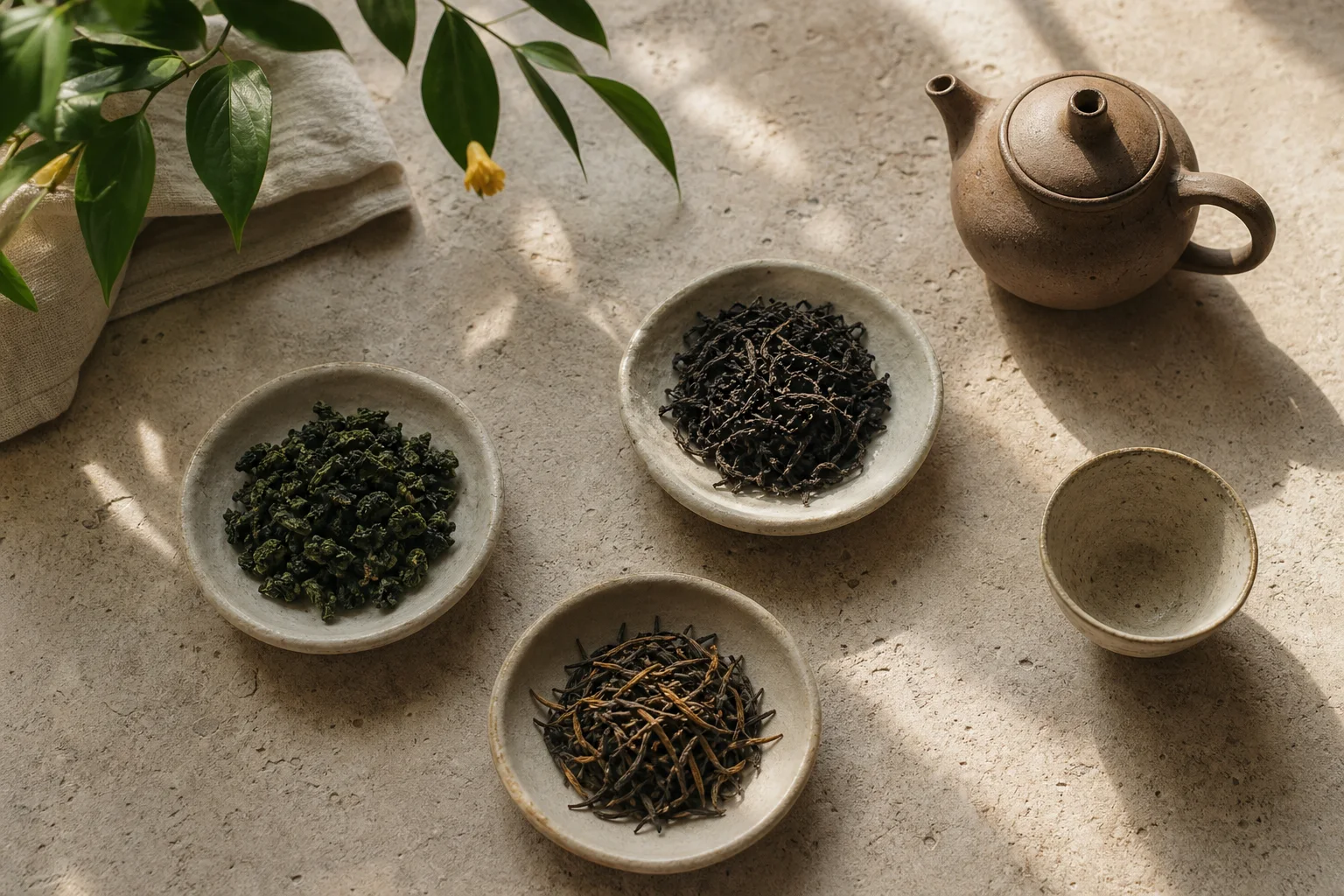
Phuket Tea Studio started with a simple question: how little could we offer while still making the world of Thai tea feel generous? The answer was not a wall of tins or a menu that asks you to become an expert before your first cup. It was three teas, each with a clear character, chosen to make sense beside the others.
A small collection changes the work. Instead of constantly finding something new to announce, we can keep returning to what is already here. We can brew each tea in different water, at different temperatures and across different moments of the day. We can notice how it settles after travelling, how the aroma opens when the pouch is first unsealed, and which instructions make the cup feel easy rather than precious.
Selection becomes less about filling gaps and more about earning a place. We look for a tea that is distinct without being difficult, expressive without needing a ceremony around it, and enjoyable after the novelty of a first tasting has passed. The final question is ordinary but useful: would we still reach for this on a quiet Tuesday? If the answer is uncertain, the shelf is better left open.
02
Three distinct ways into Thai tea
Misty Mountain Oolong is the softest entrance: floral, rounded and quietly honeyed. Phuket Jasmine Green is bright and familiar without becoming perfumed, the kind of tea that works hot in the morning and cold over ice after lunch. Old Tree Black brings the deepest register, with cacao, dried longan and malt.
Together they are not meant to represent every growing region or every style made in Thailand. No collection that small could. They are simply three convincing cups that show useful contrast: light and dark, fresh and warming, contemplative and immediately refreshing. You can choose by mood and still understand where you are going.
The collection is small enough for us to know, and varied enough for you to wander.
03
Packed when it leaves
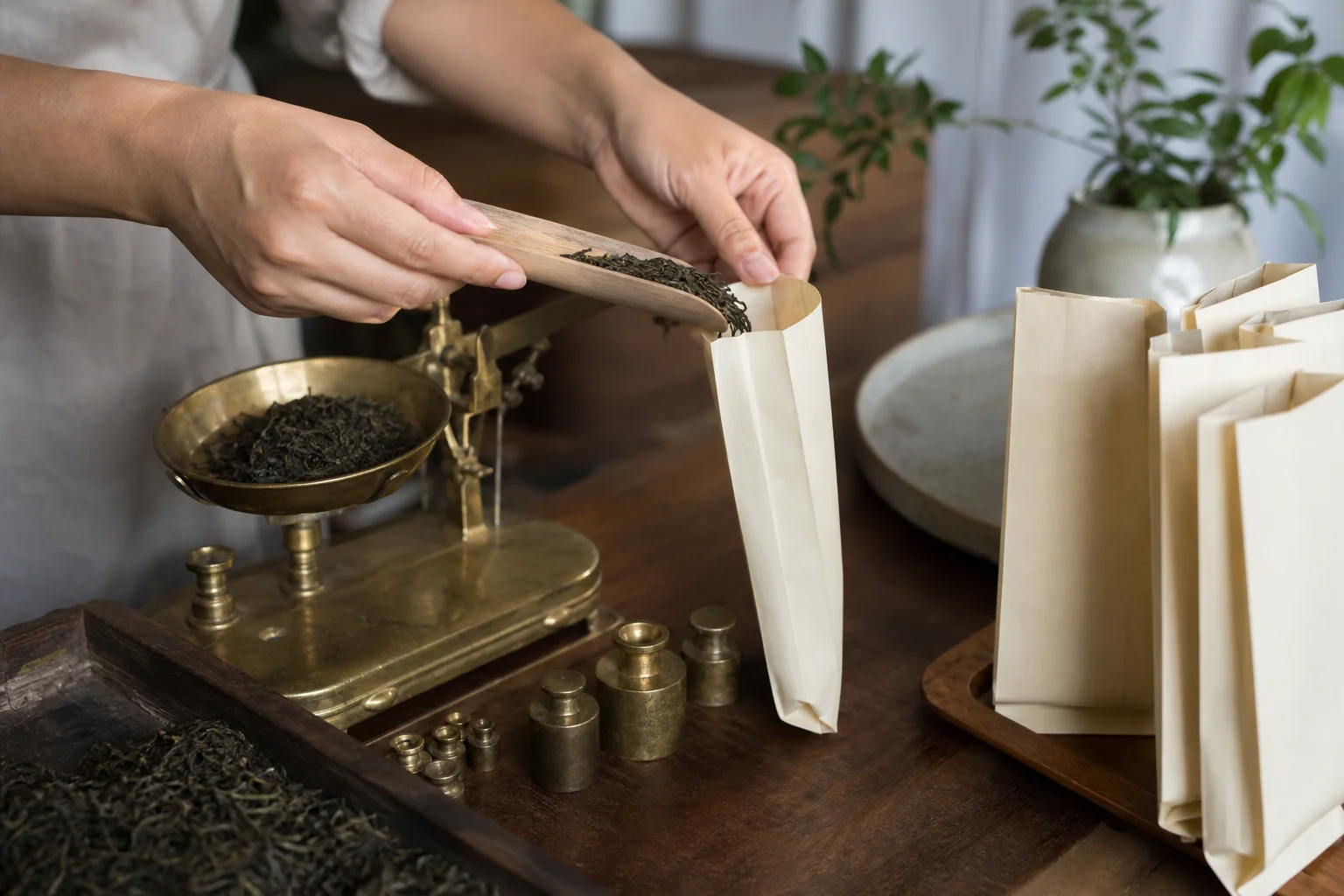
We keep the tea in working quantities and pack an order when it is ready to leave the studio. That rhythm is slower than filling a large shelf in advance, but it keeps the gap between storage and steeping short. It also makes every pouch a small act of attention: weigh, seal, label, check, then send.
Phuket shapes that rhythm. Heat and humidity make careful storage matter, and island life is a daily reminder that speed is not the same as freshness. The aim is not to pretend the process is rustic or complicated. It is to make a few sensible choices consistently, especially when no one is watching.
04
Where we begin
The first collection is an opening statement, not a finished one. Teas will change with seasons and availability. A future lot may taste different enough to deserve new brewing notes, or a place on the shelf may eventually pass to something that expresses its origin more clearly. The standard is not permanence; it is attention.
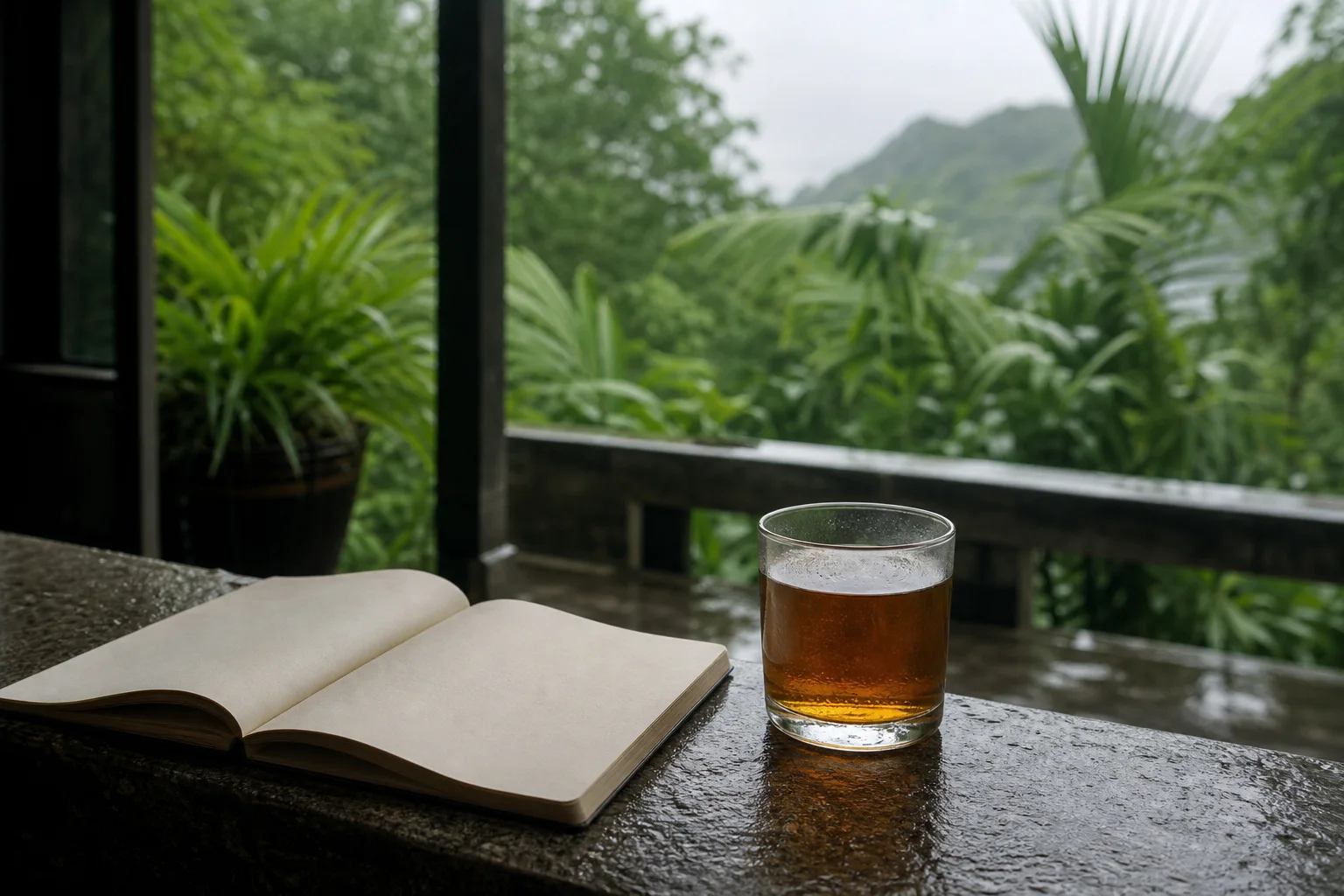
For now, these three give us everything we need: a fragrant oolong for unhurried mornings, a jasmine green made for the island heat, and a black tea with enough depth for rain against the windows. Start anywhere. Use the water you have. Pay attention to the second cup. That is the whole invitation.
There is no single correct ritual waiting at the end. Begin with the guide on the pouch, then make the next brew your own: a little cooler, a little stronger, a longer rest over ice. Good tea should reward curiosity without punishing imprecision. We want these leaves to become part of a day, not another set of rules to remember.